

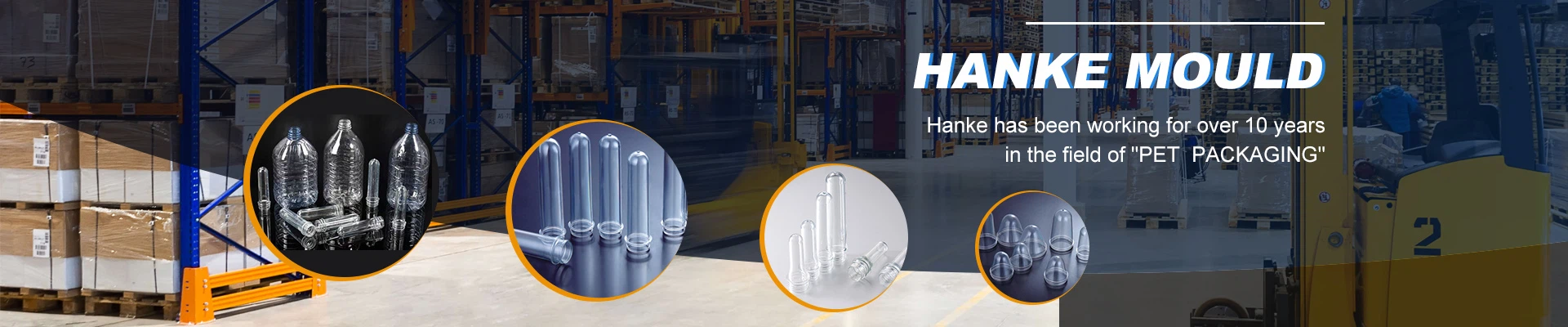

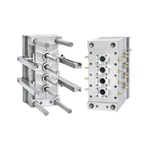
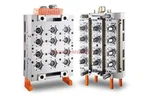
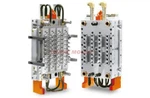

4 Cavity Pet Preform Mould

Your Leading 4 Cavity Pet Preform Mould Supplier
HANKE has been working for over 10 years in the field of "PET PACKAGING", Since its establishment, it has been focusing on the design of PET bottle shapes, preforms, and bottle caps and the development and manufacture of corresponding molds. We have extensive experience in the production of molds and equipment for preform and bottle production for our customers.
Wide Range of Applications
Widely used in beverages, food, edible oil, condiments, candy, cosmetics, detergents, medical supplies, and other fields.
Quality Assurance
There is very strict analysis and quality control from the 3D drawing of the mold to the first tryout of the mold.
Wide Range of Cooperative Countries
We have a full understanding of the export standards, transportation conditions, and requirements of the cooperative countries.
24H Online Service
Our customer service representatives are available 24/7 to assist you with any inquiries, technical issues, or after-sales services.

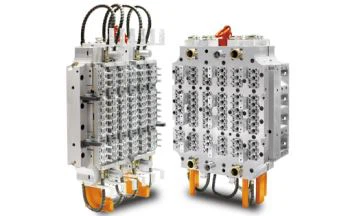
A 4-cavity PET preform mould is a type of mold used in the manufacturing process of PET (polyethylene terephthalate) preforms. The 4-cavity refers to the number of cavities or impressions within the mold. This means that the mold can produce four preforms simultaneously in each molding cycle. PET preforms are small plastic containers that are later blown into bottles or containers using a blow molding machine.
Parameter
Quick Details
Place of Origin:Zhejiang, China
Brand Name:HANKE
Model Number:4 CAVITY 5 GALLON PREFORM MOULD
Shaping Mode:Plastic Injection Mould
Product Material:Steel
Product:PACKING PRODUCTS
Name:4 CAVITY 5 GALLON PREFORM MOULD
Material:Mold core,cavity and neck srew are made of S136 material
Supply Ability:150 Set/Sets per Year
Packaging Details:Wooden box
Port:Ningbo/Shanghai
Lead Time:Shipped in 45 days after payment
Specification for PET Preform mould
1. Needle Valve of No-Cutting PET Preform Moulds
2. The number of PET preform mould cavities is up to 72 cavities for standard neck finishes, such as PCO1881, PCO1810, and 30. The cam roller design for the thread splits helps operator maintenance freely.
3. Individual Valve-Gate unit with balanced hot runner system.
4. The PET preform moulds use Dual Tapers design for Lock
5. PET preform mould materials: Mould cavity, core, neck: Germany S136
Product Name
Different volumes with different weights edible oil PET preform mould
Core &Cavity Steel
2316#steel, S136 stainless steel or based on customer's requirement.
Mould base & Standard Component
DME,HASCO,MISUMI,LKM,Self-made with P20, 3CR13, 4CR13 material etc.
Steel hardness
HRC30-35 for base material.
HRC45-48 for core and cavity material.
HRC60-62 for special parts material
Plastic material
PET, PP, ABS, PC, AS, TRITAN etc.
Cavity Number
1*4, 1*6, 1*8, 1*12, 1*16, 1*24, 1*32, 1*48 etc
Injection System
Pnuematic Valve gate with shut off&free-cut or short tail or long tail etc
Ejector System
Mould slider + Stripper plate ejection
Cycle Time
Based on PET preform thickness
Tooling lead time
30-60 Days
Mould life
At least 2.0million Shots
Quality assurance
ISO9001:2008/ CE certificate for European customers
Advantages of 4 Cavity Pet Preform Mould
Product Quality is Stable
Pet preform mold uses high-precision processing technology and materials to ensure product consistency and accuracy. In addition, the multi-cavity design can ensure that the shape, size, and weight of each product are the same.
High Productivity
Pet preform mold has a multi-cavity design, and one injection molding cycle can complete the production of multiple products at the same time, greatly improving production efficiency.
Long Life
The mold cavities are all made of high-quality mold steel, and the mold guide posts and bushings adopt oil-free lubrication, which has the strong advantage of being pollution-free and having a service life of tens of millions of times.
Specially Designed Blade
The unscrewing ring blade adopts a split structure, which allows the blade to be positioned accurately, perfectly overcoming the defects of inferior products such as poor overall blade positioning accuracy and easy damage.
Saving Cost
Pet preform mold adopts a multi-cavity design. One injection molding cycle can complete the production of multiple products. Compared with a single-cavity design, the cost of a single product in each production cycle is lower, which greatly reduces production costs.
Environmentally Friendly
The products produced by pet preform mold have accurate dimensions, stable quality, and low product scrap rate, which greatly reduces the waste of raw materials and resources.

4 Cavity Pet Preform Mould: Everything You Need to Know!
The use of a 4-cavity mould increases production efficiency, as more preforms can be made in a shorter period. The mold is typically made of high-quality steel and undergoes precision machining to ensure accurate and consistent preform production.
4 Cavity Pet Preform Mould Process
Design
The first step is to design the mould according to the required specifications and dimensions. This involves creating a 3D model of the mould using computer-aided design software.
Material Selection
PET is commonly used for making preforms. The material selection is based on factors such as the desired strength, transparency, and heat resistance of the final product.
Mould Fabrication
Once the design is finalized, the mould is fabricated using CNC machines or other machining tools. The mould typically consists of two halves, which are precision machined to create the desired shape.
Preform Injection
The mould is then installed in an injection moulding machine. PET resin pellets are heated and melted inside the machine, and the molten material is injected into the mould cavities under high pressure.
Cooling
After the injection, the mould is cooled down to solidify the molten PET material and form the preforms. Proper cooling is important to ensure that the preforms have the desired shape, dimensions, and physical properties.
Ejection
Once the preforms are properly cooled, the mould is opened, and the preforms are ejected from the mould cavities. Ejector pins or plates are used to push the preforms out of the mould.
Trimming And Finishing
The ejected preforms may have excess material or flash that needs to be trimmed off. This can be done manually or with the help of automated trimming equipment.
Packaging
The final step involves packaging the preforms for transportation or further processing. They are usually packed in plastic bags or containers to protect them from damage.
Our Service
Pre-sales:
1. Providing detailed product information and technical specifications.
2. Assisting customers in choosing the most suitable preform mould based on their specific requirements.
3. Offering professional advice on production processes and solutions.
4. Providing samples for testing and evaluation.
In-sales:
1. Ensuring timely delivery of the preform mould and related products.
2. Assisting with installation and commissioning of the mould.
3. Providing training on mold operation and maintenance.
4. Regularly updating customers on the progress of their orders.
5. Offering customization options to meet individual needs.
After-sales:
1. Providing technical support and troubleshooting assistance.
2. Offering spare parts for replacement or repair.
3. Listening to customer feedback and suggestions continuously, improve our products and services. Resolving any issues or concerns promptly and efficiently.
FAQ
Q: What is a cavity in a mould?
Q: What is PET preform mold?
Q: What is the core and cavity material in mould?
Q: How many cavities does a mould have?
Q: Can preform moulds be used for different types of products?
Q: Can preform moulds be repaired if they get damaged?
Q: Are there any safety precautions to consider when using preform moulds?
Q: What is a single cavity or double cavity mould?
The difference between these molds is fairly straightforward. Single-cavity molds produce a single product per cycle because it only have one cavity into which plastic resins can be injected. In contrast, multi-cavity molds have multiple cavities, enabling you to produce multiple parts in a single cycle. Because a multi-cavity mold is larger than a single-cavity mold, it has a higher initial investment cost. However, this cost can often be offset by a lower per-unit molding cost.
Q: What is the process of cavity molding?
Q: Can preform moulds be customized to specific product designs?
Q: Can preform moulds be used for multi-cavity production?
Using multi-cavity molds increases production efficiency as it enables the production of a higher number of preforms in each molding cycle. This can significantly increase the overall output and productivity of the manufacturing process.
When designing a multi-cavity preform mold, factors such as cavity layout, cooling system, and ejection system need to be carefully considered. The mold design should ensure uniform cooling and consistent filling of each cavity to produce preforms of consistent quality.
Q: What is a 4 cavity mold?
Q: Can a 4 cavity PET preform mould be used for high-speed production?
Q: What are the typical injection pressures used with a 4 cavity PET preform mould?
Q: Are there any design limitations when using preform molds?
Q: How is the gate design managed in a 4 cavity PET preform mould?
Q: Are there any temperature requirements for the material used in a 4 cavity PET preform mould?
Q: Can a 4 cavity PET preform mould be used for hot-fill applications?
Q: How do I maintain the dimensional accuracy of preform molded products?
Q: What are the four stages of molding?
Hot Tags: 4 cavity pet preform mould, China 4 cavity pet preform mould manufacturers, suppliers, factory
Previous
No InformationYou Might Also Like


Send Inquiry