
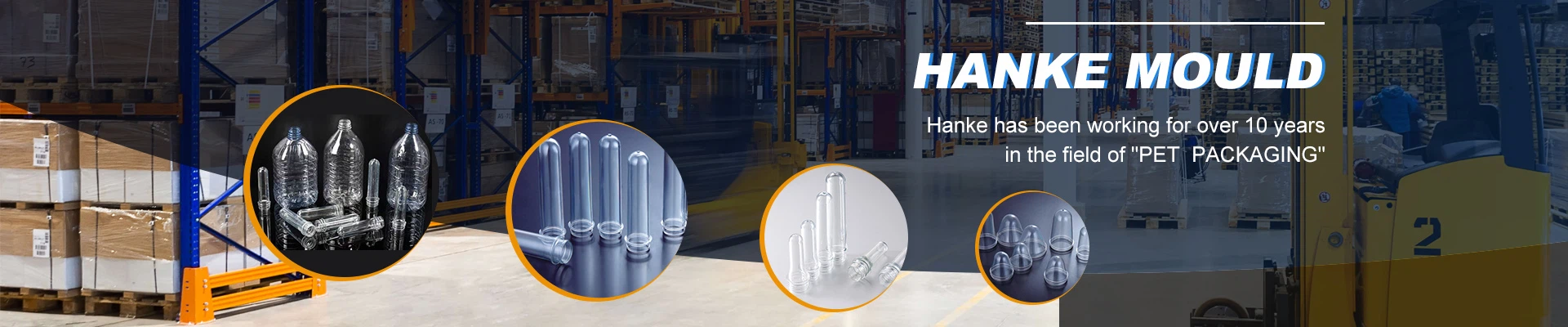
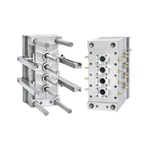
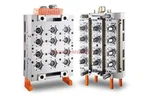
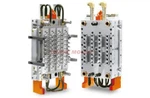
Preform Mold

3f02f3ea25be58bfdefb6bdf8ebb294e2022100913072696400947eae340db8e59dd075915ab9b


Your Leading Preform Mold Supplier

HANKE has been working for over 10 years in the field of "PET PACKAGING", Since its establishment, it has been focusing on the design of PET bottle shapes, preforms, and bottle caps and the development and manufacture of corresponding molds. We have extensive experience in the production of molds and equipment for preform and bottle production for our customers.

Wide Range of Applications

Widely used in beverages, food, edible oil, condiments, candy, cosmetics, detergents, medical supplies, and other fields.

Quality Assurance

There is very strict analysis and quality control from the 3D drawing of the mold to the first tryout of the mold.

Wide Range of Cooperative Countries

We have a full understanding of the export standards, transportation conditions, and requirements of the cooperative countries.

24H Online Service

Our customer service representatives are available 24/7 to assist you with any inquiries, technical issues, or after-sales services.


481d195b1827a3ebbfc60ad37affedd948-cavity-pet-preform-mould38166260457


What Is Preform Mold?

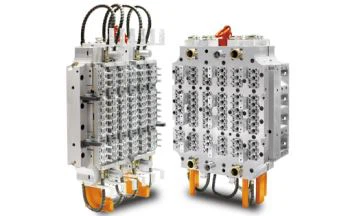
Preform mold refers to a specialized type of mould used in the manufacturing of preforms, which are semi-finished products that are further processed to create final products such as bottles, containers, or jars. The preform mold is designed to shape molten material, typically thermoplastics, into a specific preform shape with the desired dimensions and characteristics required for the final product. 
 

First 12 Last 1/2

Benefits of Preform Mold


High Accuracy

Preform molds are highly accurate and consistent in their production. The molds are computer-designed and made with the most advanced technology, which provides precise dimensions and shapes for every preform. 


Reduce Material Waste

The accuracy and consistency of the preforms help to reduce material waste and ensure that all products are of uniform quality. This results in a more efficient manufacturing process with fewer defects, which can save time and money.


Good Flexibility

These molds can produce various sizes, shapes, and designs of preforms. This means that they can be used for a wide range of products, from small bottles to large containers. Preform molds can also produce preforms in different materials, such as PET, HDPE, and PP. 


Durability

Preform molds are also known for their durability. The high-quality materials used in their construction can withstand frequent and extended use, which makes them a long-term investment.


Reduce Production Time

The molds are designed to create multiple cavities, which allows for the production of many preforms at one time. This reduces the number of runs needed to meet production requirements, which can save time and lower production costs. 


Sustainability

Since the molds are highly accurate, they produce more precise preforms, which reduces material and energy waste. This results in a more sustainable manufacturing process that reduces the environmental impact of the production process. 


Preform Mold: Everything You Need to Know!

The mold is generally made of steel and consists of two halves that are heated and cooled, allowing the molten material to solidify and take the form of the mould cavity. Perform moulds are commonly used in industries such as packaging, food and beverage, and pharmaceuticals.

17049369515761


Steps Involved in the Production
 

Designing

The mold design involves the creation of a 3D model of the mold using specialized software. The mold designer takes into account the bottle specifications, such as the size and shape, and the production requirements, such as the number of cavities, the cooling system, and quality control mechanisms.

01

Machining

After designing, the mold is machined using computerized numerical control (CNC) machines. The machining process involves cutting and shaping the steel into the desired shape and size. The CNC machines use computerized programs to control the cutting tools, ensuring high precision and accuracy in the mold's production.

02

Heat Treatment

After machining, the mold undergoes heat treatment, which involves heating the mold to high temperatures and cooling it gradually. This process improves the mold's hardness, toughness, and resistance to wear and tear. Heat treatment also reduces the residual stress in the mold, making it more durable and stable.

03

Polishing

After heat treatment, the mold undergoes polishing, which involves removing the rough edges and surfaces left by the machining process. Polishing improves the mold's surface finish, reduces friction, and enhances product quality.

04

Assembly and Testing

After polishing, the mold is assembled, and quality control tests are conducted. The mold assembler installs the cooling and ejector systems, and the mold undergoes a series of tests to ensure that it meets the required specifications and quality standards.

05


Application of Preform Mold

1

Beverage Industry

The beverage industry extensively uses preform molds to produce PET preforms, which are then blow molded into bottles for beverages like water, carbonated drinks, juices, and more.

view more
17049369135211

Packaging Industry

Preform molds are widely used in the packaging industry for producing plastic bottles, containers, jars, and caps. These molds enable efficient and high-volume production of packaging materials.

view more
productcate-511-340

Pharmaceutical Industry

Preform molds are utilized in the pharmaceutical industry for producing preforms or containers for various medicines, syrups, tablets, and other pharmaceutical products.

view more
productcate-511-340

Cosmetics Industry

Manufacturers in the cosmetics industry use preform molds to produce preforms or containers for beauty and personal care products.

view more
u29477796631459358845fm253fmtautoapp138fJPEGwebp

Medical Industry

Preform molds find applications in the medical industry for producing preforms or containers for medical devices, laboratory equipment, and disposable medical products.

view more
webp

Food Industry

The food industry also relies on preform molds for producing preforms or containers for food products like sauces, dressings, condiments, edible oils, and more.

view more


What Is The Difference Between Single-Cavity Preform Mold And Multi-Cavity Preform Mold?


Number of cavities: The main difference between a single-cavity preform mold and a multi-cavity preform mold is the number of cavities they have. A single-cavity mold only has one cavity, while a multi-cavity mold has multiple cavities, typically ranging from 2 to 96 or more.


Production output: Due to the difference in the number of cavities, the production output of these two types of molds varies significantly. A single-cavity preform mold produces one preform at a time, whereas a multi-cavity preform mold can produce multiple preforms simultaneously. 


Tooling cost: Since multi-cavity preform molds have more cavities, they require more complex tooling and higher manufacturing costs compared to single-cavity molds. The additional machining and precision required to create multiple cavities leads to increased tooling expenses for multi-cavity molds.


Mold size and complexity: Multi-cavity preform molds tend to be larger and more complex in design compared to single-cavity molds. The presence of multiple cavities requires careful engineering to ensure uniform cooling and balanced filling of each cavity.


Flexibility: Single-cavity preform molds offer more flexibility in terms of customization and experimentation. Each preform produced in a single-cavity mold can be individually adjusted and optimized for specific requirements. On the other hand, multi-cavity molds are more suited for mass production and may have less flexibility for customization due to the shared characteristics of all cavities.

Contact now


FAQ

Q: What is the process of performing injection molding?

A: First, the injection molding processing system to a preform, which is fired into the mold cavity to melt, and then rapidly cool, the preform temperature is below the crystallization temperature range, and is made of transparent preform; a second step of the preform is heated, it is higher than the glass transition temperature, and then extended, blow molding and cooling.

Q: Are preforms injection molded?

A: PET preforms are normally manufactured by using a mold on an injection molding system, which is subsequently blown into a container for edible or non-edible liquids (water, soft drinks, alcohol, oils, personal care) on a blow molding system.

Q: What is the temperature of the preform?

A: PET Preform Heating Temperature is about 75°C to 130°C on the preforms. So it will need to be adjusted according to the PET preforms` height, thickness, workshop indoor temperature, etc.

Q: What materials are used to make preform molds?

A: Preform molds are typically made from steel or aluminum alloys. These materials are chosen for their durability, heat resistance, and ability to withstand the high pressures involved in the performing process. Steel molds are often preferred for larger-scale production as they offer greater longevity and precision, while aluminum molds are commonly used for smaller runs due to their lower cost and lighter weight.

Q: Can preform molds be used for different types of products?

A: Yes, preform molds can be used for different types of products. The design and specifications of the preform mold can be customized to accommodate the specific shape, size, and material of the final product. This enables preform molds to be used in a variety of applications, including bottles, containers, jars, caps, and other plastic or glass products. The mold cavities can be adjusted or modified to suit the desired product design and production requirements.

Q: What are the characteristics of a PET preform?

A: PET Preforms are used to make bottles especially convenience-sized soft drinks, juices, and water. There is one characteristic of PET preform, which is the product that made from it will be clear and transparent. The surface is smooth and sparking.

Q: Can preform molds be repaired if they get damaged?

A: Yes, preform molds can be repaired if they get damaged. The extent and feasibility of the repair depend on the nature and severity of the damage. Common repair methods include cleaning and maintenance, surface repairs such as polishing or sanding, welding or patching for cracks or breaks, and component replacement. However, severe or extensively damaged molds may need to be replaced entirely.

Q: Can preform moulds be customized to specific product designs?

A: Preform molds can be customized to specific product designs. Preform molds are designed to shape plastic materials into specific forms, so they can be tailored to meet the exact specifications and requirements of a particular product design. This customization can involve various aspects such as the shape, size, weight, and features of the preform. Design modifications can be made to accommodate different bottle designs, neck finishes, wall thicknesses, and other specific requirements. Please write to HANKE mold designer for specific customization requirements.

Q: Are there any safety precautions to consider when using preform molds?

A: When using preform molds, it is important to follow safety precautions to protect against potential hazards. This includes wearing appropriate personal protective equipment such as gloves and safety glasses. Additionally, ensure that the machine is properly maintained and be cautious of moving parts. Preform molds involve high-temperature processes, so it is crucial to use proper insulation, heat-resistant gloves, and tools to avoid burns or scalds. Some mold-making materials or processes may involve chemicals, so follow safety instructions and use proper ventilation and protective gear.

Q: What is preform molding?

A: Preform molded parts are manufactured with a uniform distribution of glass fibers and strategic placement of glass reinforcements that increase durability and flexibility in high-stress areas. Preforms are used in a variety of structural component applications regardless of volume.

Q: What is the typical lifespan of a preform mold?

A: The lifespan of a preform mold can vary depending on several factors, including the quality of the mold, the maintenance and care it receives, the type of material being molded, and the operating conditions. Typically, a well-designed and properly maintained preform mold can have a lifespan ranging from 500,000 to 1 million shots or more. However, this is just a general estimate and the actual lifespan can differ significantly.

Q: What is a 4-cavity preform mold?

A: If several parts are produced in one cycle (one shot), the mold is called a multi-cavity preform mold. For the production of e.g. four identical parts, the short term is a 4 cavity mold. If mirrored parts are produced in one mold, for example, two left and two right side parts, the common name for the mold is 2+2 cavity mold.

Q: What is multi-cavity mold?

A: A single-cavity plastic injection mold tool is the most basic form of tooling, and the most common. With this type of tooling, one production cycle makes one finished part. Multi-cavity tools have at least two cavities and two cores, with a practical limit of potentially hundreds of small cores and cavities.

Q: What is the process of PET preform injection molding?

A: Processing PET into bottles can take two steps depending on the application or bottle. In the first step, PET is injection molded into a “mini bottle,” complete with threads, called a pre-form. This pre-form is then reheated, stretched, and blown into its final shape.

Q: Can preform molds be used for multi-cavity production?

A: Yes, preform molds can be used for multi-cavity production. Multi-cavity molds are designed to have multiple cavities within a single mold, allowing for the production of multiple preforms simultaneously. Using multi-cavity molds increases production efficiency as it enables the production of a higher number of preforms in each molding cycle. This can significantly increase the overall output and productivity of the manufacturing process. When designing a multi-cavity preform mold, factors such as cavity layout, cooling system, and ejection system need to be carefully considered. The mold design should ensure uniform cooling and consistent filling of each cavity to produce preforms of consistent quality.

Q: Are there any design limitations when using preform molds?

A: There are several design limitations when using preform molds, including part complexity, wall thickness consistency, draft angles, undercuts, and size limitations. Preform molds are better suited for simple and symmetrical parts with uniform wall thickness and appropriate draft angles. Parts with complex shapes, varying wall thicknesses, steep draft angles, undercuts, or large sizes may present challenges in preform molding.

Q: Are there any specific guidelines for storing preform molds?

A: When storing preform molds, it is important to follow certain guidelines to ensure their longevity and functionality. This includes cleaning and drying the mold before storage, applying a protective coating to prevent corrosion and sticking, using proper packaging for protection, storing in a controlled environment away from extreme conditions, and conducting regular maintenance checks.

Q: How do I maintain the dimensional accuracy of preform molded products?

A: To maintain the dimensional accuracy of preform molded products, it is crucial to have a well-designed mold with precise dimensions and tolerances. Selecting high-quality materials and implementing strict process control measures, including monitoring and controlling parameters such as temperature, pressure, and cooling time, are essential. An efficient cooling system, regular maintenance, and cleaning of the mold are also necessary.

Q: Can preform molds be used for high-temperature applications?

A: Preform molds are typically designed for lower-temperature applications and are not suitable for high-temperature applications. This is because preforms are made from materials such as polyethylene terephthalate (PET), which have a relatively low melting point and are not intended to withstand high temperatures.

Q: What is the typical cycle time for preform molding?

A: The typical cycle time for preform molding can vary depending on several factors, including the specific preform design, the material used, mold configuration, and the capabilities of the injection molding machine being used. However, in general, the cycle time for preform molding ranges from a few seconds to a few minutes.


We're professional preform mold manufacturers and suppliers in China, specialized in providing high quality customized products. We warmly welcome you to wholesale high-grade preform mold for sale here from our factory. For price consultation, contact us. 8 Cavity Round Thin Wall Container Mold, Preform Mold, Rectangular Container Mold

whatsapp

Phone

E-mail

Inquiry
