

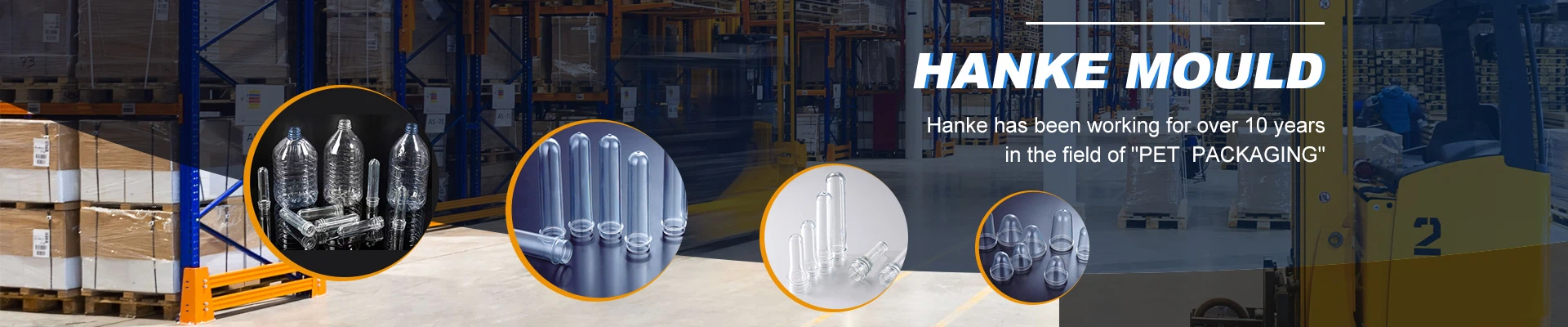
Blow molding is also called hollow blow molding, a rapidly developing plastic processing method. The tubular plastic parison obtained by extrusion or injection molding of a thermoplastic resin is placed in a split mold while it is hot (or heated to a softened state). After the mold is closed, compressed air is passed into the parison to blow the plastic parison. It swells and closely adheres to the inner wall of the mold. After cooling and demolding, various hollow products are obtained.
Common materials are aluminum alloy and zinc alloy, and the bottle mouth and bottom insert are generally made of steel. When the blow mold is processed in the main process, heat treatment is generally required in order to eliminate stress and improve its own hardness. When designing the punch die, the material of the die is generally 45 # or 40Cr. In the selection of the hardness of the mold quenching, we should fully consider the processing difficulty of the mold and the punch needle and the respective costs. Generally, the processing of the gas needle is more convenient and the cost is lower. The general quenching hardness is designed as HRC43-45 during heat treatment. The heat treatment hardness of the mold is selected as HRC50-53. In this way, the cost of the mold is higher than that of the punching needle, so the wear is much smaller than that of the punching needle. When the contact area is severely worn, only the punch is replaced. Just breathe the needle.


